
Table of Contents
Diesel and hydraulic pile hammers are two established types of impact equipment used to install driven pile foundations. Both transfer repeated impact energy into piles, allowing them to penetrate soil until the required depth or driving resistance is achieved. However, the two systems differ in how they generate impact energy, control hammer movement, respond to soil resistance, and support construction operations. Diesel pile hammers use internal combustion to maintain their operating cycle, while hydraulic pile hammers use pressurized hydraulic fluid to control the movement of a heavy ram. These differences influence equipment selection, installation efficiency, operating costs, and environmental considerations. Understanding how diesel and hydraulic pile hammers compare helps engineers and contractors choose equipment suited to specific foundation requirements.
What Is a Diesel Pile Hammer?
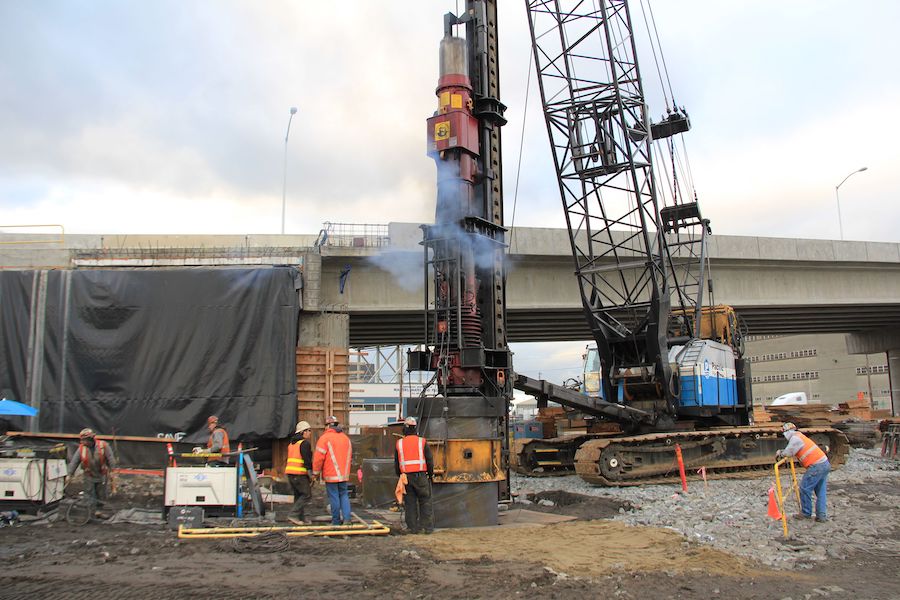
A diesel pile hammer is an impact driving machine that uses diesel combustion to produce the repetitive movement needed to drive piles into the ground. Its principal components include a cylinder, piston or ram, impact block, fuel injection system, and exhaust ports. Unlike a conventional hydraulic hammer, a diesel hammer does not need an external hydraulic power supply to raise its ram during normal operation. Instead, combustion pressure lifts the ram after each impact, allowing the hammer to continue cycling when suitable operating conditions are maintained.
Diesel pile hammers have been used extensively in foundation construction for steel H-piles, steel pipe piles, and precast concrete piles. Their relatively self-contained operating arrangement makes them useful for projects where a conventional impact driving system is required. However, diesel hammer performance depends partly on the resistance encountered during pile installation, which can affect the hammer’s stroke and combustion cycle.
How Does a Diesel Pile Hammer Work?
The operating cycle begins when the hammer’s ram is lifted to an initial starting position and released. As the ram falls through the cylinder, it compresses the air inside the combustion chamber, increasing the air temperature. Diesel fuel is introduced into the chamber, and in a conventional impact-atomization design, the descending ram strikes the impact block and atomizes the fuel. The fuel ignites in the compressed air, producing combustion pressure that drives the ram upward for the next stroke.
During the downward movement, the ram delivers impact energy through the hammer assembly into the pile. The resulting force causes the pile to penetrate the soil when the impact overcomes the resistance acting against it. The combustion cycle then raises the ram again, allowing repeated blows without a separate hydraulic lifting system. However, insufficient pile resistance can interfere with the hammer’s ability to maintain consistent combustion and ram movement.
Types of Diesel Pile Hammers
Diesel pile hammers are generally classified into single-acting and double-acting designs. A single-acting diesel hammer relies primarily on gravity to accelerate the ram downward, while combustion pressure raises the ram after impact. This design is commonly associated with conventional diesel impact driving equipment and is suitable for a wide range of pile installation applications.
Double-acting diesel hammers incorporate an additional chamber that stores energy as the ram moves upward. The compressed gas in this chamber helps accelerate the ram downward, allowing a shorter stroke and a higher operating frequency than would otherwise be possible. Although both designs use diesel combustion, their operating characteristics differ, making it important to evaluate the specifications of the actual hammer rather than treating all diesel hammers as identical.
What Is a Hydraulic Pile Hammer?
A hydraulic pile hammer is an impact driving machine that uses pressurized hydraulic fluid to operate a heavy ram. The hydraulic system raises the ram and, depending on the hammer design, may also accelerate it during the downward stroke. The hammer receives power from a dedicated hydraulic power unit or a compatible pile driving rig equipped with an appropriate hydraulic supply.
One of the main characteristics of hydraulic pile hammers is their ability to regulate impact energy through controlled ram movement. Many hydraulic hammer models allow operators to adjust the stroke height and operating parameters according to changing driving conditions. This makes hydraulic systems particularly useful when engineers need to manage pile stresses or when the ground contains soil layers with substantially different resistance characteristics.
How Does a Hydraulic Pile Hammer Work?
In a conventional single-acting hydraulic hammer, hydraulic pressure raises the ram to a selected height inside the hammer assembly. Once the ram reaches the intended position, the hydraulic system releases it, allowing gravity to accelerate the ram downward. The ram then strikes the impact components, transferring energy into the pile and causing penetration when the impact is sufficient to overcome soil resistance.
After impact, the hydraulic system raises the ram again and repeats the cycle. Operators can adjust the selected stroke height to change the energy delivered by the hammer, while some models also provide control over operating frequency and other parameters. Unlike diesel hammers, hydraulic hammers do not depend on combustion conditions created by pile resistance to maintain the operating cycle. This distinction can be important when driving piles through soft or variable ground.
Single-Acting vs Double-Acting Hydraulic Hammers
Single-acting hydraulic hammers use hydraulic pressure to lift the ram, while gravity provides the downward acceleration. The impact energy is influenced by the ram weight and drop height, although mechanical losses affect the amount of energy ultimately transferred into the pile. This operating arrangement provides a relatively direct relationship between selected stroke height and theoretical ram energy.
Double-acting hydraulic hammers use hydraulic pressure to assist the downward movement of the ram as well as its upward movement. The additional downward force allows these machines to generate impact energy without relying entirely on gravitational acceleration. As a result, the performance of a double-acting hydraulic hammer cannot be evaluated using ram weight and gravity-driven stroke height alone. Hydraulic pressure, ram velocity, and the hammer’s operating design must also be considered.
Diesel vs Hydraulic Pile Hammers: Key Differences
Diesel and hydraulic pile hammers perform the same fundamental task, but their operating characteristics differ considerably. Diesel hammers rely on combustion and the interaction between the hammer and pile resistance, while hydraulic hammers use an external power system to control ram movement. These differences influence how each machine responds to changing soil conditions, how impact energy is adjusted, and what supporting equipment is required.
The following table summarizes the principal differences between conventional diesel and hydraulic impact hammers. These are general comparisons, and individual hammer models may have additional operating features or different capabilities.
|
Comparison Factor |
Diesel Pile Hammer |
Hydraulic Pile Hammer |
|---|---|---|
|
Operating Principle |
Internal diesel combustion maintains the hammer cycle |
Hydraulic pressure operates the ram |
|
Power Source |
Diesel combustion inside the hammer |
External or rig-integrated hydraulic power |
|
Impact Energy Control |
Fuel regulation and operating conditions influence ram stroke |
Hydraulic controls regulate ram movement and impact energy |
|
Response to Soil Resistance |
Hammer cycle is influenced by pile resistance |
Operation is less dependent on pile resistance |
|
Starting Mechanism |
Requires an initial ram lift |
Uses the hydraulic operating system |
|
Performance in Very Soft Soil |
May experience inconsistent combustion or cycling |
Can continue cycling independently of combustion conditions |
|
Energy Adjustment |
Available on many models, but resistance affects operation |
Generally provides more direct energy adjustment |
|
Noise Sources |
Impact, combustion, and exhaust noise |
Impact and hydraulic power system noise |
|
Exhaust at Hammer |
Produces combustion exhaust |
Does not produce combustion exhaust at the hammer |
|
Auxiliary Equipment |
No separate hydraulic power pack required for normal cycling |
Requires a compatible hydraulic power supply |
|
Maintenance Components |
Fuel injection, cylinder, piston, and impact components |
Hydraulic seals, valves, hoses, and impact components |
|
Operating Characteristics |
Self-contained combustion-driven system |
Externally powered, hydraulically controlled system |
|
Typical Applications |
Conventional impact driving with suitable resistance |
Controlled impact driving and specialized applications |
|
Main Limitation |
Operating cycle depends partly on driving resistance |
Requires hydraulic power infrastructure |
The table highlights differences in operating principles rather than establishing one hammer type as universally superior. For example, hydraulic hammers generally provide more direct energy control, but this does not mean every hydraulic model transfers more useful energy than a diesel hammer. Similarly, the self-contained operation of a diesel hammer can simplify the equipment arrangement, but it does not automatically produce lower total construction costs. Actual performance depends on the hammer model, pile properties, soil conditions, and installation requirements.
Diesel vs Hydraulic Pile Hammers: Driving Performance
Impact Energy and Energy Transfer
Impact energy is a major factor in determining whether a pile hammer can drive a particular pile through the expected soil resistance. For a gravity-driven ram, theoretical potential energy is determined by the ram weight and the height through which it falls. However, the theoretical energy associated with the ram does not represent the exact amount of energy transferred into the pile during installation. Energy losses occur through friction, deformation of cushions and impact components, and other mechanical interactions within the hammer-pile system.
Diesel hammers introduce additional complexity because their operating cycle involves compression and combustion inside the cylinder. The energy available during impact depends on the ram movement and combustion-related operating conditions, which are influenced by pile resistance. Hydraulic hammers generally allow more direct control over ram stroke, but they also experience energy losses during operation. Consequently, comparing manufacturer-rated hammer energy alone does not establish which system will deliver better driving performance under actual site conditions.
High-strain dynamic testing can provide information about energy transferred into the pile during driving. Such measurements are useful because they evaluate the response of the operating hammer-pile system rather than relying entirely on theoretical or manufacturer-rated values. When selecting equipment, engineers should consider both the available hammer energy and the resulting stresses generated within the pile.
Performance in Hard Soil
Dense sand, stiff clay, and other high-resistance ground conditions can require substantial driving energy. Diesel pile hammers can operate effectively under these conditions because sufficient resistance helps maintain the compression and combustion cycle needed for repeated impacts. As resistance increases, the operating stroke of a diesel hammer may also change, depending on the fuel setting, hammer design, and operating limits.
Hydraulic pile hammers can also be effective in difficult driving conditions because operators can select higher impact energy when additional resistance is encountered. However, increasing energy is not always the correct response to slow penetration. Excessive driving energy can create damaging stresses in the pile, particularly when driving long or relatively slender concrete elements. The hammer must therefore provide enough energy to overcome resistance while remaining within acceptable structural limits.
A suitable hammer for hard driving is one that can achieve the required penetration without excessive blow counts or unacceptable pile stresses. Both diesel and hydraulic hammers are available in different energy capacities, so the comparison must be based on actual equipment specifications. Wave equation analysis is commonly used to evaluate anticipated driving resistance, blow counts, and stresses before installation.
Performance in Soft Soil
Soft soil creates different challenges because the pile may offer relatively little resistance during impact. Diesel pile hammers require suitable compression and combustion conditions to maintain consistent ram movement. When resistance becomes very low, the hammer may experience irregular strokes or fail to sustain its operating cycle. This limitation is particularly relevant when piles must pass through substantial thicknesses of very soft material.
Hydraulic hammers have an operational advantage in these conditions because their hydraulic systems raise the ram independently of the pile resistance needed for diesel combustion. Operators can continue the driving cycle while selecting an appropriate energy setting for the ground conditions. Lower energy settings may also help reduce unnecessary driving stresses during easy penetration.
However, soft ground does not automatically make diesel hammers unsuitable. Some diesel hammers can operate effectively through relatively soft layers, depending on the pile characteristics and the resistance available to support the hammer cycle. The decision should be based on the expected driving conditions and the capabilities of the selected equipment.
Blow Rate and Installation Speed
Hammer blow rate is often considered when evaluating pile driving productivity, but it does not independently determine installation speed. A hammer delivering more blows per minute may not complete the installation faster if each blow produces relatively little penetration. Similarly, a hammer delivering fewer but more effective blows may achieve comparable or better progress under certain conditions.
Total installation time also includes pile positioning, alignment, handling, splicing, equipment adjustments, and interruptions. These activities can represent a substantial portion of the construction process, particularly when long piles require multiple sections. Therefore, evaluating only the operating frequency of diesel and hydraulic hammers provides an incomplete comparison of construction productivity.
The more useful measurement is the total time required to install piles to the specified depth and acceptance criteria. Contractors should compare anticipated blow counts, penetration rates, equipment setup requirements, and overall installation procedures. This approach provides a more realistic basis for evaluating whether a diesel or hydraulic hammer will be more productive on a particular project.
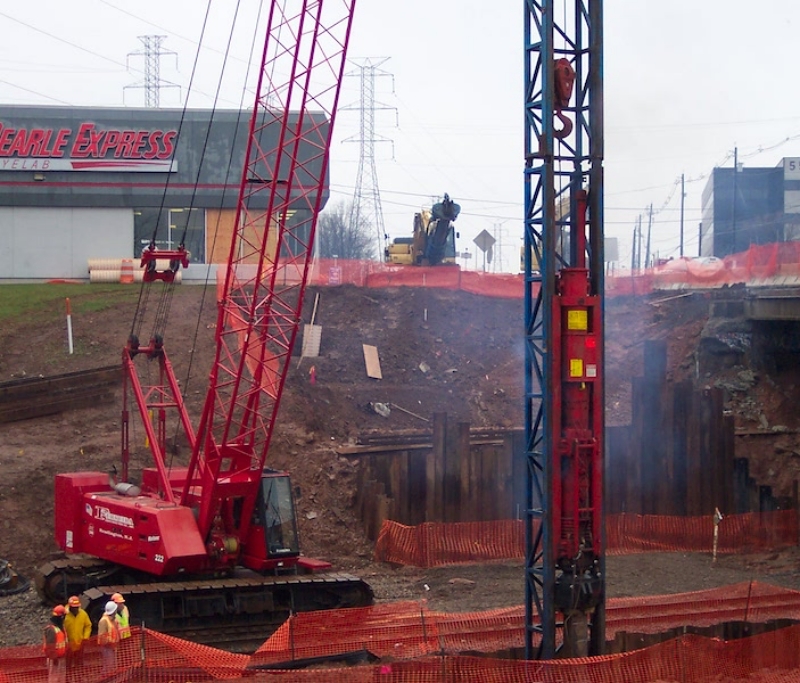
Diesel pile hammers use compression ignition, meaning fuel ignites because of the high temperature generated when air is compressed inside the cylinder. Once the hammer is operating under suitable conditions, combustion pressure raises the ram for the next impact without requiring a separate hydraulic lifting system.
Impact Energy Control and Pile Damage
Controlling Diesel Hammer Energy
Diesel pile hammers are sometimes described as having little control over impact energy, but this is not entirely accurate. Many diesel hammer models incorporate adjustable fuel injection systems that influence combustion and ram stroke. By changing the fuel setting, operators can adjust the hammer’s operating behavior within the limits of its design.
However, diesel hammer energy remains influenced by the interaction between the hammer and pile resistance. Changes in soil conditions can affect the ram stroke and combustion cycle even when the fuel setting remains unchanged. Operators must therefore observe the hammer’s operating behavior and driving response rather than assuming that a fixed fuel setting produces identical impacts throughout installation.
Controlling Hydraulic Hammer Energy
Hydraulic pile hammers generally provide more direct control over impact energy because ram movement is regulated through the hydraulic system. Operators can select lower energy during easy driving and increase the setting when additional resistance is encountered. This allows the hammer to respond to changing ground conditions without relying on combustion behavior.
Some hydraulic hammer models also incorporate electronic monitoring systems that display operating parameters such as stroke height, ram velocity, or calculated impact energy. The availability and accuracy of these functions depend on the specific equipment. When properly used, such controls can help operators maintain consistent driving procedures and manage the stresses imposed on the pile.
Managing Pile Damage During Installation
Both diesel and hydraulic pile hammers can damage piles if the equipment is poorly matched to the foundation element or driving conditions. Excessive compressive stresses can cause crushing or other structural damage, while tensile stresses may lead to cracking in concrete piles. The severity of these stresses depends on the impact characteristics, pile properties, soil resistance, and cushioning arrangements.
Hydraulic hammers offer practical benefits when frequent energy adjustments are needed, but this does not eliminate the possibility of pile damage. Diesel hammers can also install piles safely when the selected hammer, cushions, and driving procedures are appropriate. For either system, drivability analysis and suitable monitoring provide a stronger basis for protecting piles than equipment type alone.
Diesel vs Hydraulic Pile Hammers: Noise and Environmental Impact
Noise During Pile Driving
Impact pile driving generates substantial noise because the hammer repeatedly strikes the pile through its driving components. Diesel pile hammers produce impact noise along with combustion and exhaust noise, while hydraulic hammers generate impact noise and sound associated with their hydraulic power systems. The relative noise levels depend on the hammer model, operating energy, pile material, and site conditions.
Hydraulic hammers may produce lower overall noise levels than comparable diesel equipment under certain operating conditions because they do not generate combustion exhaust noise at the hammer. However, the impact itself can remain a dominant noise source. A high-energy hydraulic hammer may still produce substantial sound levels, particularly when driving steel piles.
For construction near residential areas, hospitals, schools, or other sensitive locations, the actual noise characteristics of the proposed equipment should be evaluated. Changing from diesel to hydraulic impact driving does not guarantee compliance with project noise restrictions. In some circumstances, alternative installation methods may be necessary to satisfy environmental requirements.
Ground Vibration
Both diesel and hydraulic impact hammers generate ground vibration as impact energy travels through the pile and surrounding soil. The vibration reaching nearby structures depends on the soil conditions, pile dimensions, driving energy, distance, and the interaction between the pile and ground. These factors can vary significantly across a construction site.
Hydraulic energy adjustment can help operators regulate the intensity of individual impacts, but it does not eliminate vibration. Diesel hammers can also operate at different energy levels, although their control mechanism is less independent of driving resistance. Where nearby structures are sensitive to vibration, engineers should evaluate the complete installation method and consider appropriate monitoring.
Exhaust Emissions and Hydraulic Fluid
Diesel pile hammers generate exhaust directly from combustion inside the hammer cylinder. Hydraulic impact hammers do not burn fuel within their striking mechanism, so they avoid this particular source of exhaust. However, many hydraulic systems receive power from diesel-driven hydraulic power units, meaning that the complete equipment arrangement may still produce engine emissions.
Hydraulic systems also contain pressurized fluid, hoses, seals, and connections that require inspection and maintenance. Fluid leakage can create environmental and operational concerns if it is not properly controlled. Consequently, the environmental comparison should consider the entire pile driving system rather than focusing only on the hammer itself.
Diesel vs Hydraulic Pile Hammers: Equipment and Operating Costs
Initial Equipment Costs
Initial equipment costs depend on the hammer model, capacity, mounting arrangement, and supporting machinery. Diesel pile hammers have a relatively self-contained operating system and do not require a separate hydraulic power pack for their normal combustion cycle. This can simplify the equipment arrangement in projects where a compatible crane or pile driving rig is already available.
Hydraulic pile hammers require an appropriate hydraulic power supply, control system, and associated connections. Some machines operate from dedicated power packs, while others use hydraulic systems integrated into the carrier or piling rig. The additional equipment requirements can influence the initial cost, but the difference varies considerably between installations.
It would be misleading to state that diesel hammers are always cheaper to purchase or rent than hydraulic hammers. Equipment prices depend on capacity, manufacturer, age, condition, and the complete operating package. A meaningful cost comparison must examine specific machines capable of completing the same foundation work.
Fuel Consumption and Operating Expenses
Diesel hammers consume fuel through their internal combustion cycle, while hydraulic hammers consume energy supplied by their hydraulic power systems. If the hydraulic power unit uses a diesel engine, both systems ultimately depend on diesel fuel, although they use it differently. Comparing fuel consumption therefore requires examining the complete equipment arrangement rather than the hammer alone.
Operating expenses also include labor, maintenance, equipment availability, and installation productivity. A hammer with higher hourly operating costs may still provide a lower cost per installed pile if it completes the work more efficiently. Conversely, a simpler equipment arrangement may be economical when the required piles can be installed without additional power units or specialized operating systems.
The most useful cost measurement is the total expense of installing piles to the required acceptance criteria. This includes the equipment required, time spent driving, interruptions, maintenance, and other project-specific costs. Neither diesel nor hydraulic technology guarantees the lowest installation cost in every application.
Maintenance Requirements
Diesel hammer maintenance focuses on components exposed to combustion, repeated impact, and mechanical movement. These include the fuel injection system, cylinder, piston rings, lubrication system, and impact components. Proper maintenance is necessary to maintain combustion performance and prevent excessive wear.
Hydraulic hammer maintenance involves the hydraulic cylinders, seals, valves, hoses, controls, and mechanical striking components. High-pressure hydraulic systems require suitable inspection procedures and trained maintenance personnel. Although the components differ from those of diesel hammers, hydraulic systems are not inherently maintenance-free.
Reliability depends heavily on equipment condition, maintenance quality, manufacturer support, and replacement part availability. A well-maintained diesel hammer may provide dependable service for many projects, while a properly maintained hydraulic hammer can also operate reliably under demanding conditions. Maintenance requirements should therefore be evaluated according to the specific equipment rather than broad assumptions about either technology.
Choosing Diesel or Hydraulic Hammers for Different Pile Types
Steel H-Piles and Steel Pipe Piles
Steel H-piles and pipe piles are commonly installed using impact driving equipment. Both diesel and hydraulic hammers can provide suitable driving energy, provided their operating characteristics match the pile dimensions and expected soil resistance. Steel piles can tolerate substantial driving forces, but excessive stresses and local damage remain important considerations.
For projects involving dense soil or high driving resistance, hammer capacity and energy transfer are particularly important. Diesel hammers can be effective where sufficient resistance supports consistent operation, while hydraulic hammers allow direct adjustment of energy as driving conditions change. The final selection should consider pile stresses, penetration requirements, equipment compatibility, and overall construction productivity.
Precast Concrete Piles
Precast concrete piles require careful control of impact stresses because excessive compression or tension can damage the pile. Driving cushions and suitable hammer accessories are used to manage the transmission of impact forces into the concrete. The properties and condition of these components can significantly affect driving performance.
Hydraulic hammers provide direct stroke adjustment, which can be beneficial when concrete piles pass through soil layers with different resistance characteristics. Diesel hammers can also install precast concrete piles successfully when their energy characteristics and the pile’s structural response are properly evaluated. Wave equation analysis is particularly useful for assessing driving stresses and selecting suitable hammer and cushion arrangements.
Marine and Offshore Piling
Marine and offshore foundation construction often requires equipment capable of driving large-diameter steel piles under demanding conditions. Hydraulic impact hammers are widely used in these applications, and specialized models are designed for high-energy operation and underwater installation. Their operating systems can incorporate controls and arrangements suited to particular marine construction requirements.
Diesel hammers are also used in marine piling where their operating conditions are compatible with the project. However, conventional diesel combustion requires appropriate air and exhaust conditions, making standard diesel hammer operation unsuitable for direct underwater use. Water depth, pile dimensions, handling arrangements, and environmental restrictions must therefore be considered when selecting marine pile driving equipment.
Urban Foundation Construction
Urban piling projects frequently involve nearby buildings, restricted working areas, and limits on construction noise or vibration. Hydraulic hammers can offer advantages where controlled impact energy is important, particularly when soil resistance changes during installation. Some hydraulic systems also support specialized noise-reduction arrangements.
Nevertheless, conventional hydraulic impact hammers still generate substantial impulsive noise and ground vibration. Diesel hammers may also be suitable where site restrictions allow their operation and the equipment meets the required driving conditions. If environmental limits are particularly strict, contractors may need to evaluate alternative installation techniques rather than relying solely on a change in hammer technology.
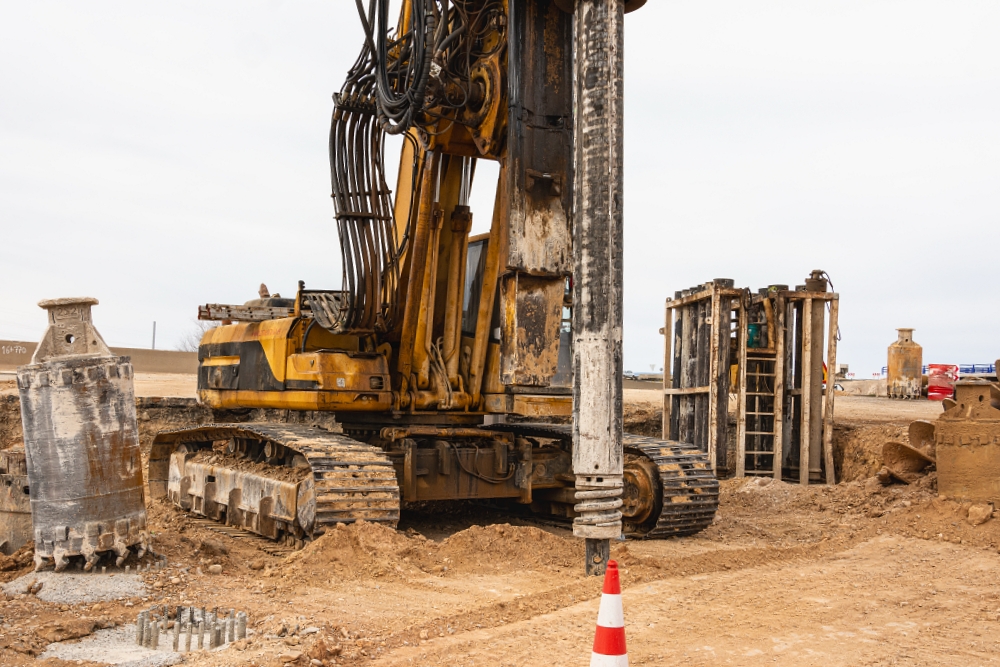
Double-acting hydraulic pile hammers use hydraulic pressure to assist the downward movement of the ram rather than relying entirely on gravity. This allows the hammer to generate impact energy through a combination of ram movement and hydraulically applied force.
How to Select the Right Pile Driving Hammer
Evaluate Soil Conditions and Driving Resistance
The selection process should begin with the geotechnical conditions and foundation requirements. Soil investigation data help engineers estimate the resistance that piles may encounter during installation, including changes between soft and dense layers. These conditions influence the driving energy required and the likelihood of difficult penetration.
Diesel hammers may be suitable where the expected resistance supports consistent combustion and effective driving. Hydraulic hammers can provide greater operating flexibility where resistance varies significantly, particularly when very soft layers are present. However, the actual hammer capacity and pile response must be evaluated before deciding which system is appropriate.
Consider Pile Dimensions and Structural Capacity
Pile material, cross-sectional dimensions, length, and structural capacity influence the selection of impact driving equipment. A hammer must provide enough energy to achieve penetration without creating unacceptable compressive or tensile stresses. Larger or longer piles do not automatically require a particular hammer technology, because the necessary energy also depends on ground resistance and pile characteristics.
Wave equation analysis can be used to evaluate the relationship between hammer performance, pile stresses, and expected blow counts. This helps engineers identify suitable equipment and assess whether adjustments to hammer energy or driving accessories are necessary. The analysis should consider the actual hammer model rather than relying only on general diesel or hydraulic classifications.
Compare Productivity and Total Project Costs
Once technically suitable equipment has been identified, contractors can compare construction productivity and overall costs. This assessment should include equipment mobilization, setup, pile handling, anticipated driving time, maintenance, and any supporting power systems. A hammer that appears economical based on rental price alone may not provide the lowest total installation cost.
Equipment availability and operator familiarity can also influence the decision. Contractors with existing diesel hammer equipment may find it practical to use those machines when they meet the project requirements, while projects requiring specialized energy control may benefit from hydraulic systems. The objective is to select equipment that satisfies the technical requirements while supporting efficient and economical construction.
Final Verdict: Diesel vs Hydraulic Pile Hammers
Diesel and hydraulic pile hammers are both established technologies for installing driven pile foundations, but they offer different operating characteristics. Diesel hammers use a self-contained combustion cycle and can perform effectively in ground conditions that support consistent hammer operation. Hydraulic hammers use an external hydraulic power system and generally provide more direct control over impact energy, making them useful when driving conditions change or precise operating adjustments are required.
Neither hammer type is universally superior in driving performance, efficiency, or total construction cost. A diesel hammer may be a practical choice for conventional piling where its operating characteristics match the soil resistance and foundation requirements. A hydraulic hammer may offer advantages when energy control, specialized installation conditions, or operating flexibility are particularly important.
The most appropriate equipment is determined by the pile properties, expected driving resistance, allowable stresses, environmental requirements, and overall construction costs. Engineers and contractors should evaluate specific hammer models using manufacturer specifications, drivability analysis, and relevant project data. Selecting a properly matched hammer is more important than choosing diesel or hydraulic technology based on general assumptions alone.