
Table of Contents
Pile driving combines heavy equipment, suspended loads, high-energy impact or vibration, elevated work, and changing ground conditions. These hazards make OSHA pile driving regulations an essential part of planning and executing foundation work. Contractors must understand that OSHA pile driving requirements are not contained in a single rule. Depending on the equipment and work activity, compliance may involve 29 CFR 1926.603, 29 CFR 1926.1439, other provisions of Subpart CC, excavation requirements, fall protection rules, and general construction safety standards. This article explains the principal federal OSHA requirements, but employers must also account for state-plan standards, manufacturer instructions, and project-specific hazards.
Understanding the Main OSHA Pile Driving Standards
Requirements Under 29 CFR 1926.603
The primary pile driving equipment regulations are found in 29 CFR 1926.603, which is part of Subpart O. OSHA 1926.603 establishes requirements for pile-driving equipment, leads, hammer hoses, access, pile extraction, work in excavated pits, and certain activities around driven piles.
The rule applies to traditional pile-driving operations and addresses hazards specific to the work. It includes requirements for blocking equipment, securing leads, protecting hose connections, maintaining safe access, controlling piles during positioning, and preventing workers from being exposed beneath elevated equipment.
Compliance with 29 CFR 1926.603 does not necessarily satisfy every OSHA requirement that may apply to a pile-driving operation. Employers must evaluate the complete operation, equipment configuration, work area, and employee exposure.
Requirements Under 29 CFR 1926.1439
A dedicated pile driver is a machine designed to function exclusively as a pile driver. These machines typically can hoist the pile material and perform the driving operation.
Under 29 CFR 1926.1439, most provisions of Subpart CC apply to dedicated pile drivers, subject to the exceptions listed in that section. Subpart CC covers cranes and derricks used in construction and includes requirements related to equipment operation, inspections, assembly, ground conditions, power lines, signaling, operator qualification, and controlling suspended loads.
The difference between OSHA 1926.603 and 1926.1439 is therefore important. Section 1926.603 addresses pile-driving hazards and equipment practices, while Section 1926.1439 establishes how Subpart CC applies to machines classified as dedicated pile drivers. A contractor may need to comply with both standards during the same operation.
Pile Driving Equipment Safety Requirements
Equipment Inspection and Condition
Pile driving inspection requirements begin with confirming that equipment is in safe operating condition before use. Inspection procedures should reflect the equipment type, manufacturer instructions, applicable OSHA provisions, and the conditions observed at the jobsite.
Components requiring attention may include wire ropes, hoisting lines, hooks, sheaves, leads, connections, hydraulic systems, guards, hoses, brakes, controls, warning devices, attachment points, and structural members. Defects affecting safe operation must be addressed before the equipment continues working.
A pile driving equipment inspection checklist can help organize the process, but a checklist does not replace the judgment of a competent person, qualified person, operator, or other individual whose responsibilities are defined by the applicable standard. Inspections must be meaningful and must account for damage, wear, improper assembly, and changes that occur during production.
Supporting and Blocking Equipment
When employees work beneath pile-driving equipment or related components, the equipment must be properly supported. OSHA pile driving safety requirements do not permit workers to rely solely on a hoist line or hydraulic system where blocking or another secure means of support is required.
This issue is especially important during maintenance, adjustment, lead work, or removal of obstructions. Stored energy, suspended components, and unintended movement can create serious caught-between and struck-by hazards. Equipment should be shut down, secured, and blocked according to the applicable procedure before employees enter an exposure area.
Pile Driving Leads and Hammer Safety
Fixed and Swinging Leads
Pile driving leads safety depends on secure connections, controlled movement, and appropriate access. Fixed leads must be provided with attachment points that allow employees working in elevated positions to connect required personal fall protection equipment.
Swinging leads present different movement and positioning hazards. They must be controlled so they do not swing or move unexpectedly while employees are exposed. Workers should not place themselves between a pile, leads, equipment, or another fixed object where movement could create a crushing hazard.
The crew must also account for the position of the hammer, pile, leads, and rig throughout pitching and driving. Clear communication is necessary whenever operator visibility is restricted or multiple workers are involved in controlling the pile.
Pile Hammer Hose Connections
OSHA safety chain requirements for pile hammer hoses address the danger created when a pressurized air hose or steam hose separates at a coupling. Safety chains or an equivalent means must be provided at each hose connection to prevent the line from thrashing if the coupling disconnects.
The restraining device must be installed at the hose connection where separation could occur. Contractors should inspect the hose, coupling, and safety chain as part of routine pile hammer safety checks. A restraint that is missing, incorrectly attached, damaged, or unable to control the disconnected line does not provide the intended protection.
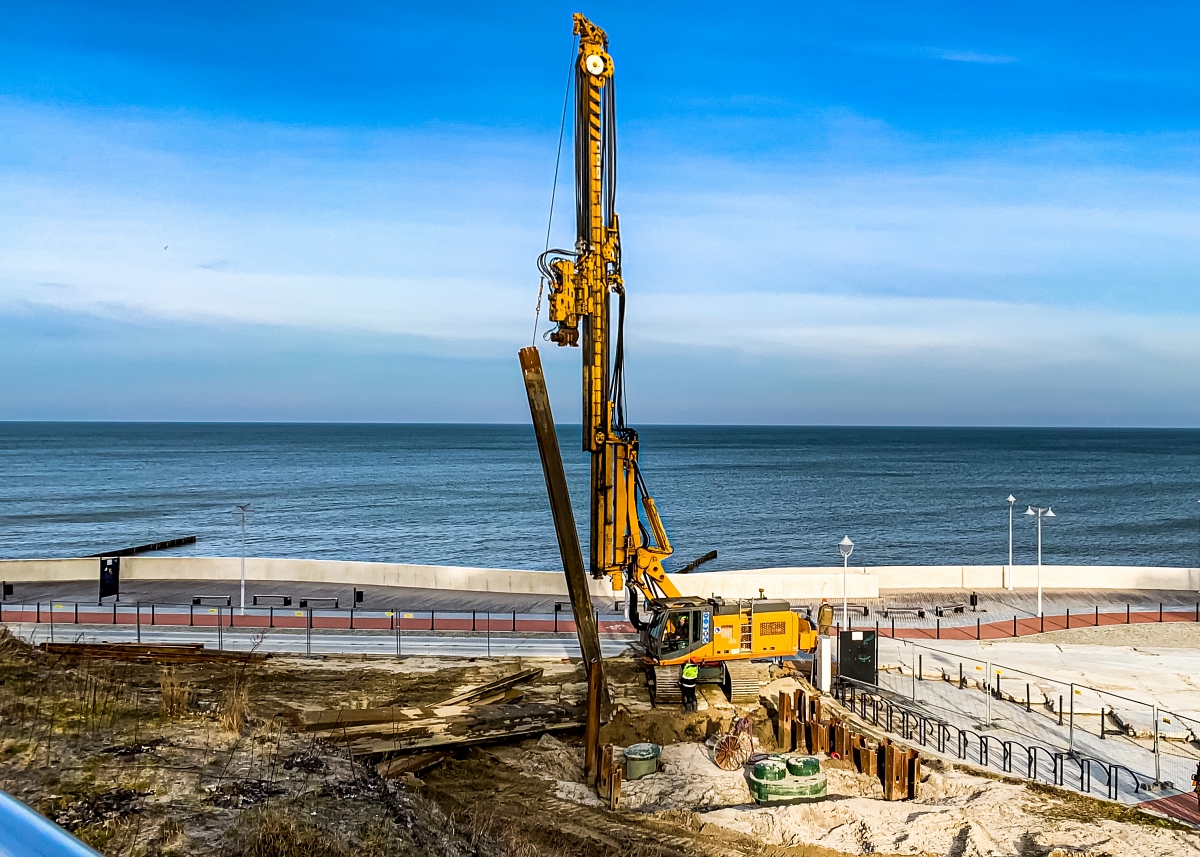
Dedicated pile drivers are generally covered by OSHA Subpart CC through 29 CFR 1926.1439. Contractors may also need to follow 29 CFR 1926.603 for pile-driving-specific hazards involving leads, hammers, access, and equipment support.
Access, Fall Protection, and Elevated Work
Safe Access to Work Positions
OSHA pile driving access requirements include safe means for employees to reach required work locations. Access ladders, platforms, walkways, and climbing arrangements must be appropriate for the task and maintained in safe condition.
Workers should not climb leads, structural members, or suspended piles unless the arrangement is specifically designed and permitted for access. Mud, water, ice, loose materials, damaged rungs, and poorly positioned ladders can make routine access hazardous.
When jacked piles are installed, access pits must be equipped with ladders and bulkheaded curbs intended to prevent material from falling into the pit. Other excavation rules may also apply based on pit depth, soil conditions, configuration, and employee exposure.
Fall Protection for Pile Driving Work
OSHA fall protection requirements for pile driving depend on the work location and the applicable standard. Fixed leads must include attachment points for loft workers. Employees exposed to falls from leads, platforms, structures, pits, or other elevated locations may also be covered by broader construction fall protection requirements.
Employers should determine the required fall protection system before work begins. The assessment must consider anchorage, connection methods, climbing access, rescue, movement of the leads, and whether the selected equipment creates additional struck-by or entanglement hazards.
Providing a harness alone is not a complete fall protection program. The system must include compatible components, proper anchorage, employee training, inspection, and a workable method for responding after a fall.
Safe Control of Piles and Suspended Loads
Positioning Piles for Driving
Piles must be controlled while being moved, pitched, and placed in the leads. Workers should remain clear of suspended loads and avoid standing where a swinging pile, hammer, lead, or line could strike or trap them.
Tag lines or other control methods may be necessary when their use can reduce exposure without creating a new hazard. The crew should establish who controls the movement, who gives signals, and where employees must stand during each stage of the operation.
Stop blocks must be provided for the leads to prevent the hammer from being raised against the head block. This protects against unintended contact and equipment damage during hoisting.
Operator and Signal-Person Responsibilities
Pile driving operator safety requires clear communication and control of the machine. When a signal person is required under Subpart CC, that individual must meet OSHA’s qualification requirements for the signaling methods used.
The operator must understand the equipment’s controls, limitations, configuration, and operating conditions. For equipment covered by Subpart CC, operator training, certification or licensing, and employer evaluation requirements may apply.
Crew members must know who has signaling authority, how emergency stop signals are communicated, and what to do when communication is lost. Operations should stop when the operator cannot see the work and does not have a reliable signal from a qualified person.
Requirements for Pits, Sheet Piles, and Cutoffs
Driving Piles in Excavated Pits
When piles are driven in an excavated pit, the pit walls must be sloped or otherwise protected as required. OSHA’s excavation standards may impose additional protective-system, access, inspection, spoil-placement, and water-control requirements.
A competent person should inspect excavations as required, particularly after rain, ground movement, vibration, or another event that could affect stability. Pile-driving vibration can influence nearby soil and temporary support systems, so pit conditions should be monitored throughout the work.
Cutting Off Driven Piles
OSHA rules for cutting off driven piles generally require pile-driving operations to be suspended while pile tops are being cut. An exception applies when the cutting operation is located at least twice the length of the longest pile from the driver.
This separation requirement reduces exposure to the active pile-driving operation. Contractors must still control cutting hazards, falling materials, hot work, sharp edges, equipment movement, and employee access around the cutoff area.
Sheet Piles and Pile Extraction
When sheet piles are installed in or around excavations, the pile-driving operation must be coordinated with the excavation protective system. The presence of sheet piling does not automatically establish that an excavation is adequately protected.
During pile extraction, workers must stay clear of piles, lines, clamps, and equipment that may move suddenly when resistance is released. Extraction can introduce substantial stored energy and unpredictable movement, particularly when piles are bound in the soil or connected to adjacent members.
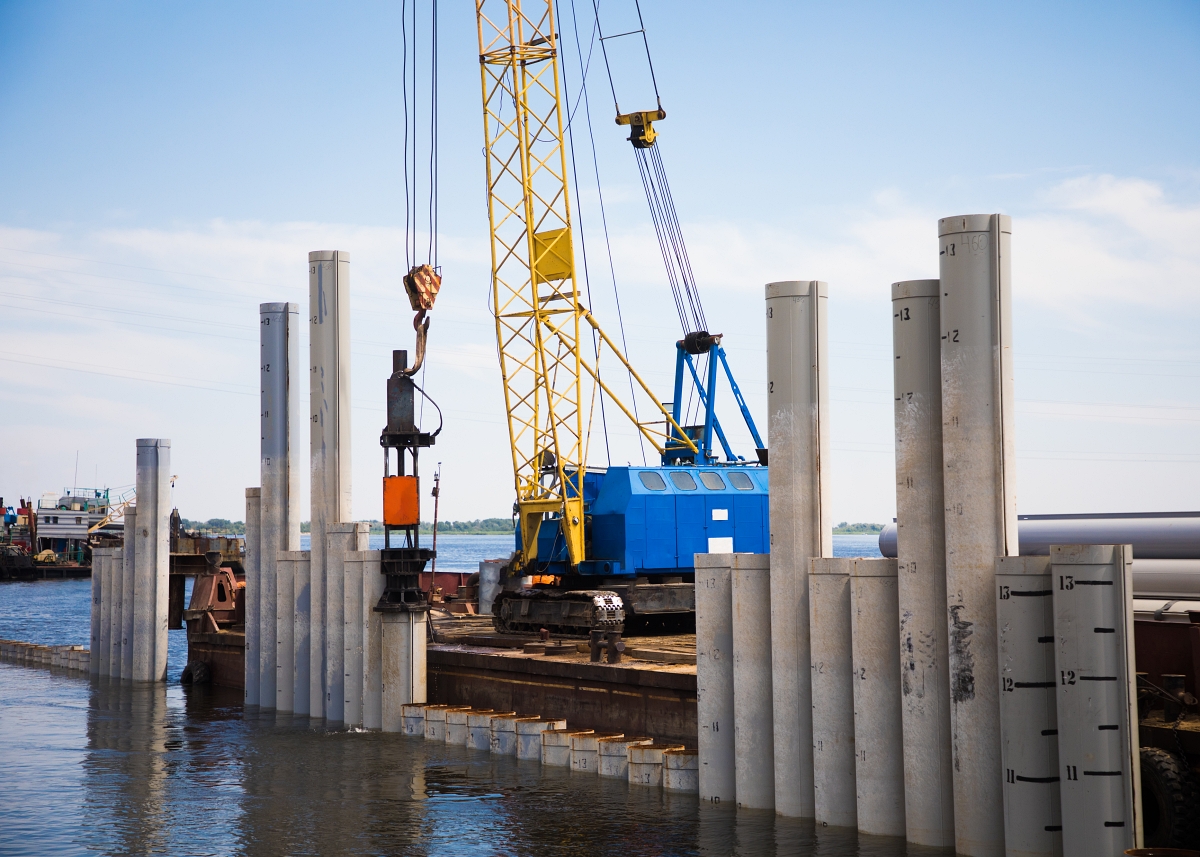
OSHA requires stop blocks on pile-driving leads to prevent the hammer from being raised against the head block. This requirement helps reduce equipment damage and uncontrolled hammer movement.
Building an OSHA Pile Driving Compliance Program
An OSHA pile driving compliance checklist should begin with identifying the equipment classification and the standards that apply. Contractors must determine whether the machine is a dedicated pile driver, crane-mounted system, excavator-mounted attachment, vibratory driver, impact hammer system, or another configuration.
The employer should then complete a hazard assessment covering ground conditions, overhead power lines, suspended loads, equipment access, operator visibility, fall exposure, excavation hazards, pressurized hoses, noise, flying material, pinch points, and crew positioning. Required personal protective equipment may include head, eye, hearing, foot, hand, and high-visibility protection, depending on the hazards identified.
OSHA pile driving training requirements are not satisfied by a general orientation alone. Employees must receive training appropriate to their assigned duties and exposure. Operators, signal persons, riggers, loft workers, spotters, and ground personnel require different knowledge and practical skills.
Pile driving crew safety ultimately depends on applying the regulations to the actual operation. Proper inspections, qualified personnel, secure leads, restrained hose connections, safe access, controlled loads, and clear communication must remain in place throughout production. OSHA pile driving standards establish minimum federal requirements, but the contractor must continuously evaluate site conditions and stop work when the operation cannot be performed safely.